Your booking cart is empty!
Anna Avanesova, Founder and CEO
Anna leads Ada Tours, our Rio de Janeiro destination management and incoming tour business serving travel agencies and tour operators across Brazil and Latin America.
Updated
TLDR An agency needs a DMC or incoming tour operator that takes clear responsibility for the agreed local services. The labels overlap. Choose by who contracts suppliers, coordinates delivery and handles changes, then agree how the agency's brand appears. A congress can also need a PCO to manage the event itself.
Three quotes arrive for the same Peru and Brazil trip: one from a DMC, one from an incoming operator and one from a ground handler. The itineraries look similar. The useful comparison begins with the question underneath them: who has actually agreed to deliver each part?
At Ada Tours, we recommend choosing the scope of responsibility before choosing the label. A partner earns its place when the hotel booking, guide assignment and next transfer join up into a programme your agency can sell with a clear understanding of who does what.
You need whichever partner will contract and coordinate the local services your agency requires. A destination management company, or DMC, usually stresses local knowledge and programme delivery; an incoming tour operator stresses receiving travellers and assembling their trip in the destination. Neither description tells you the exact scope of an individual agreement.
ADMEI's definition of a DMC includes local expertise, tours, transport, events and programme logistics. HSMAI's definition similarly connects the role with local travel, meetings and entertainment. Both roles can involve the same local services.
Ireland's incoming operators association admits inbound operators, handling agents, DMCs and PCOs that package tourism services for overseas trade partners. Terminology still leaves the scope of each contract to establish.
| Description on the quote | Question that matters to the agency |
|---|---|
| DMC | Which local services will you contract, coordinate and deliver? |
| Incoming tour operator | Will you assemble our full ground itinerary, or supply selected services? |
| Ground handler | Where does your assignment start and finish, and who coordinates the adjoining services? |
| Travel agency | Are you selling another operator's arrangements, assembling the trip, or doing both? |
| PCO | Which congress management functions will you take on, and which local services sit with a separate partner? |
The UN Statistics Division distinguishes selling travel services from arranging and assembling tours. A business can perform both roles; identify the activity you are purchasing.
If a destination body points your agency towards providers, confirm which business accepts local delivery responsibility. Visit Newport Beach's DMO and DMC explanation separates destination promotion from delivery on the ground.
Ask for the contracting entity and the delivery contact for each service. One proposal can contain bookings held by different parties.
Begin with one ordinary day. Who books the room, instructs the driver and gives the guide the final timings? Then ask who can authorise a replacement, whose approval is needed for an extra charge and who reports the change to your agency.
These are commercial questions, not promises carried by an acronym. ADMEI provides standard service agreement resources, while its membership requirements distinguish service capabilities from documentation such as business licences and insurance evidence. Ask for the relevant documents as well as the itinerary; association terminology alone does not establish the terms of your booking.

The more services must work together, the more coordination your agency needs to buy. An FIT itinerary for independently travelling guests, a private group and a multi-country journey can all require a DMC or incoming operator, but they put different pressure on the agreement.
For an FIT, specify private or shared excursions and whether the traveller meets a guide or only a driver. For a private group, add rooming, luggage, guide language, meeting points, walking distances, access needs and the tour leader's role.

Our Peru and Brazil itineraries can bring together airport transfers, guided visits and stays in both countries. Within a programme, a transfer can be driver-only while a visit includes a guide.

A multi-country journey needs someone to coordinate the transition between the country programmes. Establish whether your lead partner takes that role or whether your agency manages separate local agreements.
Consider a simplified quoting example: assume three ground-service lines in Peru and three in Brazil, comprising accommodation, transfers and guided visits in each country. That makes six service lines, even if one document covers them. If your agency books the flight between them, both arrival and departure teams need the same confirmed flight information.
A regional lead can suit an agency that wants one coordination relationship. Separate country operators can suit an agency with staff able to manage both contracts and the transition. Our multi-country DMC guide develops that choice; the Peru incoming operator guide covers country-specific selection.
A congress needs a professional congress organiser, or PCO, when the assignment includes managing the congress itself. Hotels, delegate transfers and a dinner programme do not by themselves establish responsibility for registration, abstracts, speakers, sponsorship or the event budget.
IAPCO's PCO selection guidance distinguishes comprehensive congress management from partial destination services. Its request-for-proposal guidance also stresses giving bidders enough information to describe the service required.
For example, an agency sending delegates to an existing congress can need accommodation, transport and local coordination while the congress organiser already manages registration and the scientific programme. An association creating its own congress needs those event functions assigned explicitly. A PCO and a DMC can work alongside each other. Where an association already has an event team, buy the missing functions; IAPCO also recognises in-house organisers.
We can arrange local congress services including vehicles, guides, an on-the-ground coordinator, hotels, catering and meeting coordination, matched to the brief. If your association needs end-to-end scientific congress management, ask a specialist PCO to scope that work. Our local logistics proposal should not be read as acceptance of every congress function.
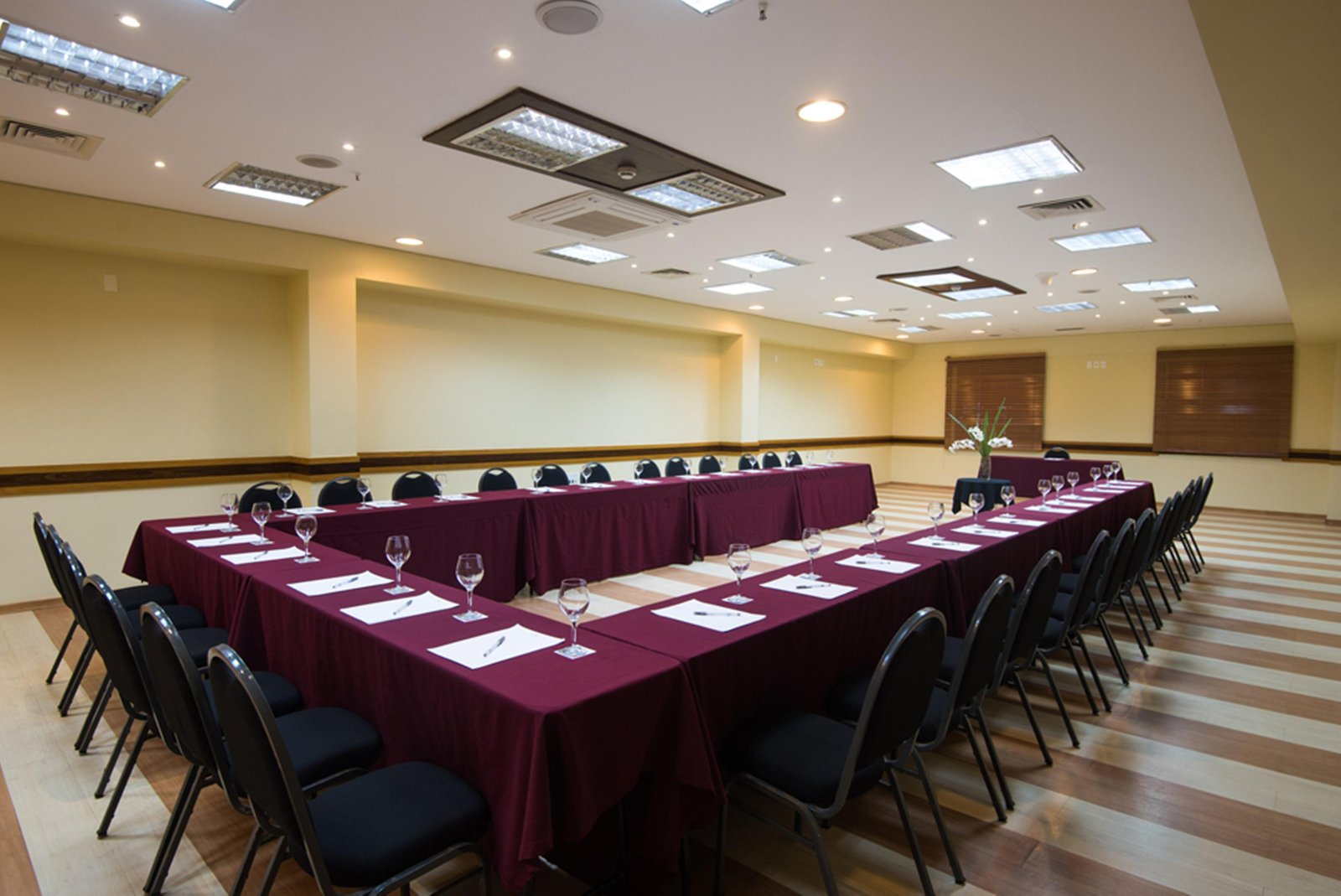
IAPCO's member guidance describes congress organisation as a PCO's core business. Use that distinction when appointing your lead organiser.
Brand presentation changes what travellers see; it still needs an agreed operating arrangement behind it. Decide whose name appears on the welcome sign, itinerary, vouchers and practical contact information, and how the local team introduces itself.
We can work under your agency's brand or as Ada Tours. That lets you choose the presentation that suits your traveller relationship, while the proposal sets out the services we are arranging. Brand choice does not establish a commission, net-rate agreement or particular cancellation term.
If your agency already has the supplier relationships and staff to coordinate a simple stay, direct contracting can be sufficient. Buy the coordination your programme needs.
For the next level of detail, use our Brazil DMC selection guide and agency-brand handoff guide. They take the contracting and presentation questions into a specific destination and working relationship.
Ask every prospective partner the same four questions about your actual programme. Compare the assignments each business accepts.
A useful reply names responsibilities and exclusions against the itinerary. If a congress is involved, add the division between local logistics and congress management.
Send us a brief with the destinations, travel dates, group or FIT requirements and the services your agency will retain. Tell us whether you want to operate under your brand or ours, so we can discuss the local delivery arrangement your programme needs.
Ada Tours works as a destination management and incoming tour business for Brazil and Latin America. Your proposal should identify the destinations, local services and coordination included in the particular assignment.
Ada Tours can work under your agency's brand or as Ada Tours. Agree the traveller-facing documents, welcome arrangements and local introductions alongside the scope of services.
Ada Tours can arrange itineraries combining Peru and Brazil, with local transfers and guided visits matched to the programme. Specify who books the flights between countries and who distributes confirmed arrival and departure information.
Ada Tours recommends asking who contracts and coordinates each local service rather than assuming supplier ownership from the DMC label. Identify the hotel, transport and guide arrangements in the agreement, including any services your agency books separately.
Ada Tours recommends a specialist PCO when the requirement includes full congress management such as abstracts, registration, speakers and the event budget. Assign local accommodation, transport and coordination separately so both teams know where their responsibilities meet.
Ada Tours distinguishes driver-only transfers from services that include a guide when setting out an itinerary. Specify the guiding language, meeting point and assistance required for each service before the programme is agreed.
Industry references checked 23 October 2026. Links appear beside the points they support.