Your booking cart is empty!
Updated 6 October 2026

TLDR: A tailor-made Brazil trip for two works when you brief your DMC on pace, not just destinations: how many nights Rio, the Amazon and the Pantanal each need, who coordinates the flights and transfers between them, what hotel standard should carry through all three, and the current visa rule for each traveller's passport.
Rio, the Amazon and the Pantanal look straightforward side by side on a map. A traveller can usually name what they want from each: the city and the coast in Rio, the river and forest in the Amazon, the wildlife in the Pantanal. What is harder to picture, before a DMC puts it in writing, is how the three stops actually connect: which flights exist, how long the ground transfer into a lodge takes, and whether three nights somewhere is a comfortable visit or a rushed one.
We set out what two travellers planning a private, tailor-made route across those three regions should ask a DMC to specify before approving an itinerary, not a fixed package or a universal day count.
There is no single correct day count for Rio, the Amazon and the Pantanal. The starting point is that each region needs enough time to absorb its own travel day, so a one-night stop rarely works once a flight and a lodge transfer are both counted against it.
Ada Tours' own current itineraries give a useful reference point rather than a rule. A combined Rio, Manaus and Foz do Iguaçu programme in our 2026 catalogue runs eight days and seven nights, with a dedicated flight day built in between each stop. A separate multi-ecosystem programme allocates contiguous blocks, for example two nights at one lodge and three at the next, rather than splitting nights evenly across every stop. Standalone Pantanal-only programmes in the same catalogue range from four nights for a short wildlife visit up to nine nights for a fuller safari.
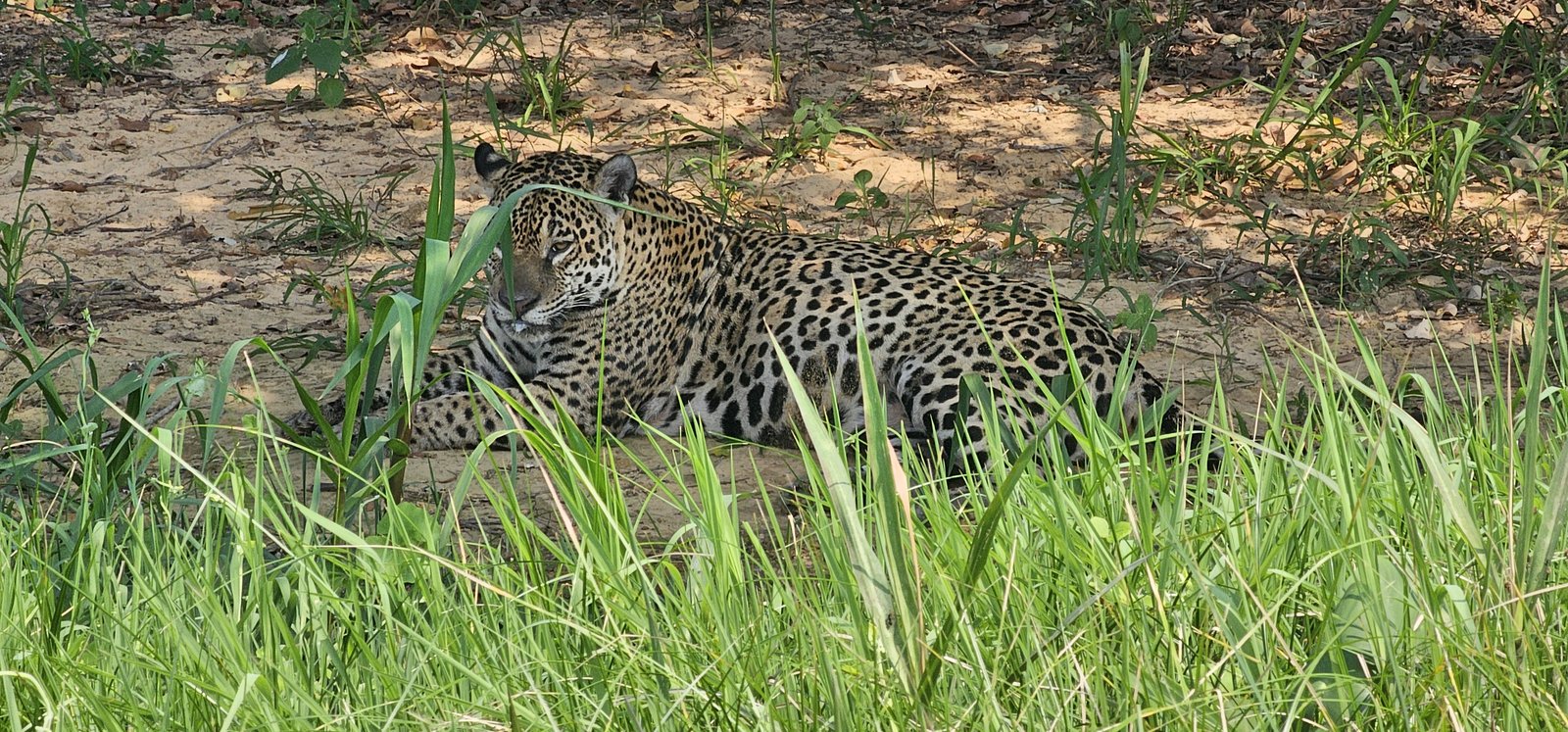
Season changes the calculation, especially for the Pantanal. A WWF-Brazil-initiated jaguar survey recorded average dry-season (roughly July to October) home ranges of about 54 square kilometres, against about 13 square kilometres in the wet season, as falling water concentrates the cats along exposed riverbanks. In the wet season, roughly December to March, much of the park's grasslands flood and its access road becomes impassable, shifting a lodge to boat-only transfers under the area managed by ICMBio, Brazil's federal protected-areas institute. The Amazon runs on a different clock: its dry season, roughly June to October, suits hiking and land-based wildlife viewing, while river-level records for the Rio Negro at Manaus, kept by Brazil's geological service and reported via Agência Brasil, show water typically rising toward a peak around June and falling toward its lowest point later in the year, the stretch when flooded-forest areas open to canoe. Rio's own dry season, roughly May to October, with July typically the driest month, follows the official climate normals published by INMET, Brazil's national meteorological institute. Ask your DMC to confirm which season your travel dates fall in for each region and what that means for access, not just for wildlife odds.
| Days | Region | Focus |
|---|---|---|
| Days 1 to 3 | Rio de Janeiro | Arrival, city and coastal orientation, setting the pace for the rest of the trip |
| Day 4 | Transfer | Domestic flight from Rio toward the Amazon gateway, commonly Manaus |
| Days 4 to 6 | Amazon | Lodge stay; river and forest activity led by the lodge's own guiding team |
| Day 7 | Transfer | Flight connection toward the Pantanal gateway, commonly Cuiabá, plus the road or boat transfer into the lodge |
| Days 7 to 9 | Pantanal | Wildlife-focused lodge stay; dry season gives the most reliable sightings |
| Day 10 | Departure | Return flight connections home |
Treat that structure as a starting shape to test against your own priorities, not a schedule to accept as drawn. If you would rather trade a Pantanal night for an extra Rio day, say so before the DMC quotes flights and lodges against the first version.
Rio connects directly to both Amazon and Pantanal gateway cities by scheduled domestic flight, on routes served by more than one of Brazil's major carriers; current route listings change, so confirm the operating airline and timing with your DMC or the airline directly before booking. Cuiabá is the main gateway airport for the northern Pantanal. There is no useful direct flight between the Amazon and the Pantanal themselves, so most routes return through a hub such as Rio or São Paulo rather than connecting the two directly.
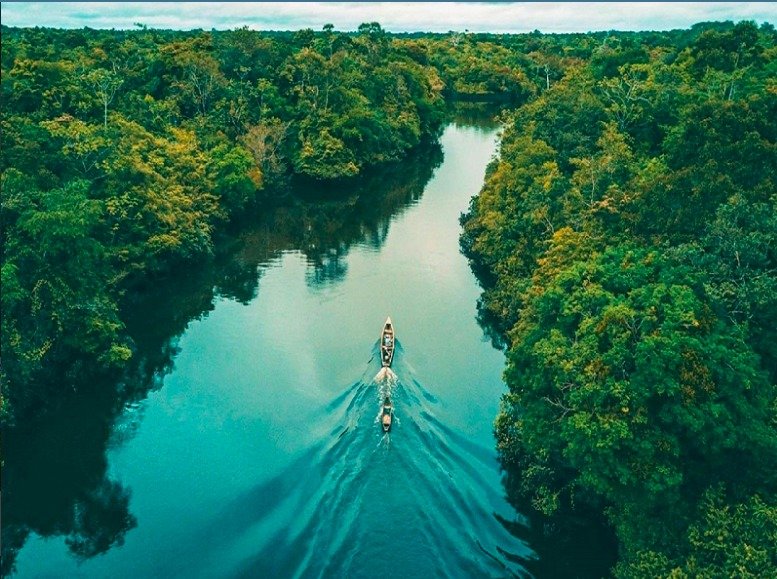
The flight is rarely the whole journey. An Amazon lodge is commonly reached by river or road transfer after landing in Manaus, and a Pantanal lodge north of Cuiabá is commonly reached by several hours on the Transpantaneira road or by a combination of road and boat, depending on the season and the exact lodge. Several of the wildest stretches on both routes sit inside federal protected areas managed by ICMBio, Brazil's biodiversity conservation institute, which is part of why a private guide and a planned route matter more here than in a city. Ask your DMC to state the transfer time for each leg in writing, not just the flight time, so a tight connection does not turn into a missed dinner or a late arrival in the dark.
Guides typically change at each stop: a city guide in Rio, a lodge-based naturalist guide in the Amazon, and a specialist wildlife guide in the Pantanal. Brief your DMC on who meets you at each airport, how they identify themselves, and who you contact if a flight changes mid-trip. A single point of contact for the whole route, rather than three separate regional contacts, is the detail that actually prevents a missed handoff.
A Rio hotel, an Amazon lodge and a Pantanal fazenda are different buildings solving different problems, and treating them as equivalent because they share a star rating is where expectations usually go wrong. A city hotel answers to air conditioning, reliable wifi and a predictable bathroom. A jungle lodge answers to screening against insects, generator hours and the honest limits of its power supply. A Pantanal lodge answers to similar constraints, plus the distance to the nearest town if something needs replacing.
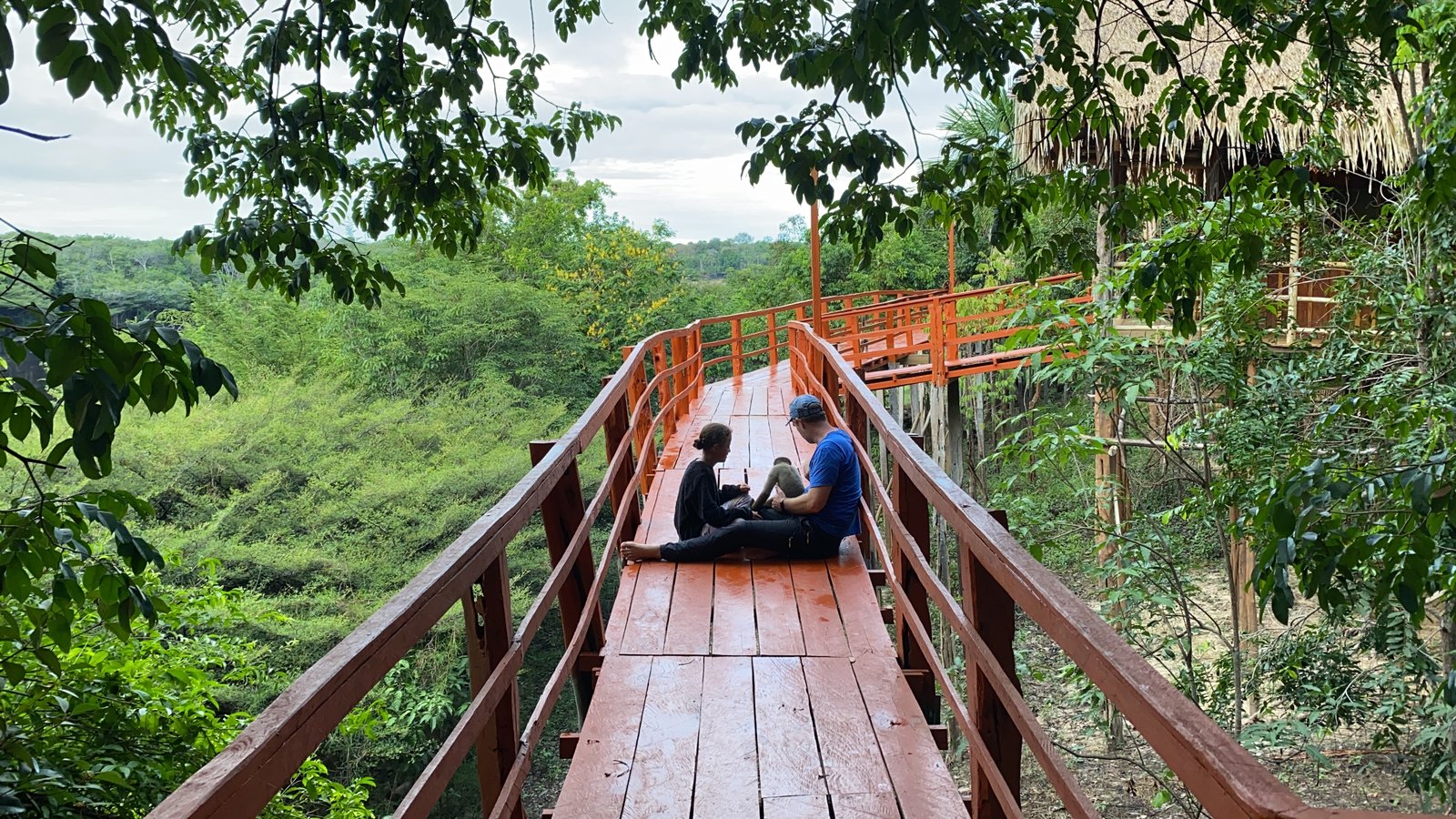
Define the standard you expect in practical terms rather than a star count: a private bathroom, dependable drinking water, functioning mosquito screening, and a realistic answer on air conditioning versus fan-cooled rooms in the heat. Ask the same question of every property in the itinerary, region by region, so a weak link does not surface only once you have arrived.
Meal inclusions need the same precision. Breakfast is not automatically included at every hotel or lodge. It depends on the specific property and programme, and some programmes exclude it at particular hotels even when it is included elsewhere on the same trip, so ask your DMC to confirm, in writing, exactly which meals are included at each individual stop rather than assuming one answer covers the whole itinerary.
Use this as a working checklist for the first conversation with a DMC, before any itinerary is quoted as final.
A DMC that answers all seven points clearly, in one document, has given you something you can actually compare against another proposal. A DMC that answers only the destinations and the price has left the operational questions for you to discover on the ground.
Entry rules depend on each traveller's own passport, not on the trip itself, so a couple travelling on different passports can face two different requirements for the same route. The table below reflects the official Brazil e-Visa portal, the UK government's Brazil travel advice and the Government of Canada's Brazil travel advice, each checked today. The US Department of State's own visitor visa page blocks automated access, so confirm the current US requirement there directly rather than from this article alone.
| Passport | Visa rule for tourism | Typical stay permitted |
|---|---|---|
| United States | E-visa required since 10 April 2025, applied for online before travel | Up to 90 days per visit, up to 180 days in any 12 months |
| United Kingdom | No visa required for tourism; passport must be valid at least 6 months beyond arrival | Up to 90 days |
| Canada | E-visa required since 10 April 2025, applied for online before travel | Up to 90 days before an extension is needed |
These rules change, and they are not Ada Tours' to confirm on your behalf. Check the current requirement for each traveller's actual nationality against the official source before paying a deposit on any itinerary, and allow processing time for an e-visa rather than assuming it can be arranged at the airport.
We are a Rio-based destination management company that coordinates travel across Brazil and the wider region, for travel-trade partners and for direct travellers planning their own tailor-made journeys. For a couple planning a private, multi-region route, our role is to turn the questions above into one written plan: the night allocation per region, the flight and transfer connections, the hotel and lodge standard at each stop, and a single point of contact if anything changes once you have left home.
We can also point you toward a narrower, related brief if your priority is specific rather than general. If a private Pantanal trip built around fishing is closer to what you actually want, our guide to briefing a private Pantanal fishing trip covers that version of the conversation in more depth.
| Approach | What you get | What you still have to do |
|---|---|---|
| Book each region separately, through local tour desks and direct hotel bookings | Local-rate pricing at each individual stop | Coordinate every transfer yourself and resolve problems in each region separately, often across a language or time-zone gap |
| A general international travel agent | One point of contact for flights and hotel bookings | Often limited first-hand access to Brazil-specific lodges and the on-ground logistics across three different ecosystems |
| A Brazil-based DMC such as Ada Tours | One operator coordinating lodges, guides, transfers and domestic flights across all three regions, with a single contact for changes | Less freedom to mix and match every supplier yourself; the plan depends on that DMC's own current network and availability |
We cannot confirm a price, a specific hotel or an exact availability window in an article; those depend on your travel dates and the current quote for your route. What we can do is take the brief above and return it as one written plan, so you are comparing a complete proposal rather than three separate quotes that may not actually connect.
Send us your dates and priorities for Rio, the Amazon and the Pantanal, and we will come back with a route that accounts for the transfers, not just the destinations.
Ada Tours can scope a private, multi-region Brazil itinerary around a couple's pace and priorities across Rio, the Amazon and the Pantanal. The final route depends on current flight connections, confirmed lodge availability and the operating plan agreed for that specific trip.
Ada Tours allocates nights around the transfer time each region actually needs and the traveller's priorities, not a fixed universal split. A contiguous block of nights per region, rather than single-night stops, is the starting point for a workable plan.
Ada Tours can coordinate the domestic flight connections, ground transfers and local guides between Rio, the Amazon and the Pantanal as part of a tailor-made itinerary. Confirm which legs are included in the quoted plan and which remain the traveller's own booking.
Ada Tours can set out the confirmed inclusions, such as meals, transfers and activities, for each hotel or lodge in the proposed itinerary. Breakfast and other inclusions vary by property, so ask for them to be confirmed in writing for the exact hotel booked, not assumed from an earlier trip.
Ada Tours can advise on the general entry pattern for a route, but the visa or e-visa requirement for each traveller depends on their own passport and current government rules. Check the official requirement for each nationality in the couple before the itinerary is finalised, since the rule can differ even between travelling companions.
Ada Tours can adjust the route, night allocation and activity pace once both travellers' priorities are clear, since a tailor-made itinerary is built around the couple, not a fixed template. Share the slower-pace preference early, before lodges and domestic flights are quoted, so the adjustment does not require re-booking.