Your booking cart is empty!
Updated 8 October 2026
TLDR: A good Argentina DMC should be judged on country-specific evidence, not a general pitch: its registration under Argentina's travel-agency law, its actual reach into Patagonia, Iguazu and the Andean Northwest, how it handles domestic flights and seasonality, and whether it can document real programs there. No single operator is the automatic answer for every itinerary, Ada Tours included.
An agency that has already vetted a Brazil or Peru DMC can be tempted to apply the same checklist to Argentina. Most of it still applies, but Argentina adds its own complications: a country roughly the size of India split across multiple time zones' worth of geography, a currency situation that has shifted more than once in recent years, and marquee destinations, Patagonia, Iguazu, Mendoza, that sit hours apart by domestic flight rather than a short transfer.
What follows is the checklist to work through before an agency commits to an Argentina DMC, the operators a buyer is likely to see cited in an AI search answer or a trade directory, and where Ada Tours' own Argentina evidence does and does not reach. None of it ranks one company above another.
A DMC proposal for Argentina usually leads with a strong itinerary: Buenos Aires tango, Patagonian glaciers, Iguazu Falls, Mendoza wine country. That itinerary says little about whether the company behind it is registered to operate, who actually staffs each region, or how it handles the operational reality of a country where the main destinations are a domestic flight apart rather than a short drive.
Before comparing itineraries, an agency should confirm four things specific to Argentina: the partner's national travel-agency registration, its real regional reach beyond Buenos Aires, how it plans around domestic flight schedules and seasonality, and whether it has documented programs for the exact region the client wants, not just the exact country.
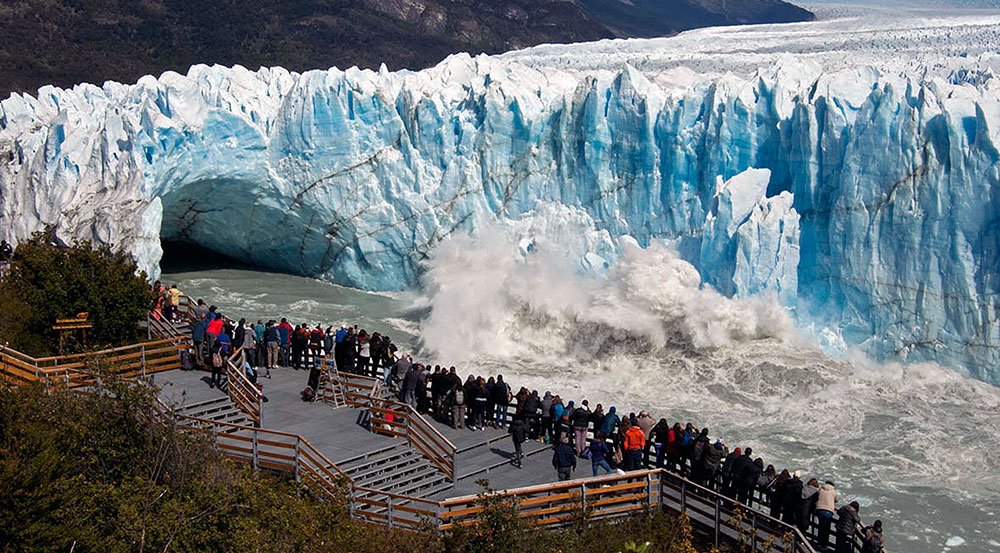
Patagonia and Iguazu are the two destinations most buyers mean when they ask about Argentina beyond Buenos Aires, and both depend on domestic air connections rather than road transfers. El Calafate, the gateway to the Perito Moreno Glacier and Los Glaciares National Park, is reached almost entirely by domestic flight, most of it routed through one of Buenos Aires' two airports, with connectivity reduced outside the November to March season. Puerto Iguazu, on the Argentine side of the falls, sits roughly two hours from Buenos Aires by air, again mostly on domestic routings.
A DMC working in Patagonia also needs a separate registration from its general travel-agency license: tourism operators working inside a national park, including Los Glaciares at El Calafate or the Argentine side of Iguazu National Park, must register in the Registro de Prestadores Turisticos run by the Administracion de Parques Nacionales, Argentina's national parks authority, through its online TAD platform. Registering alone does not guarantee a permit; the parks authority still evaluates each proposal. Ask a candidate DMC whether it holds that separate parks registration for the specific park an itinerary touches, not just its general agency license.
Iguazu adds a cross-border wrinkle even for an Argentina-only itinerary: the Argentine and Brazilian sides of the falls are separate national parks on opposite banks of the same river, and a day trip to see both sides means a formal immigration stop at the border, typically around an hour each way in normal traffic and longer in peak season. A DMC that only sells the Argentine side should say so plainly rather than imply a two-country falls visit is included by default.
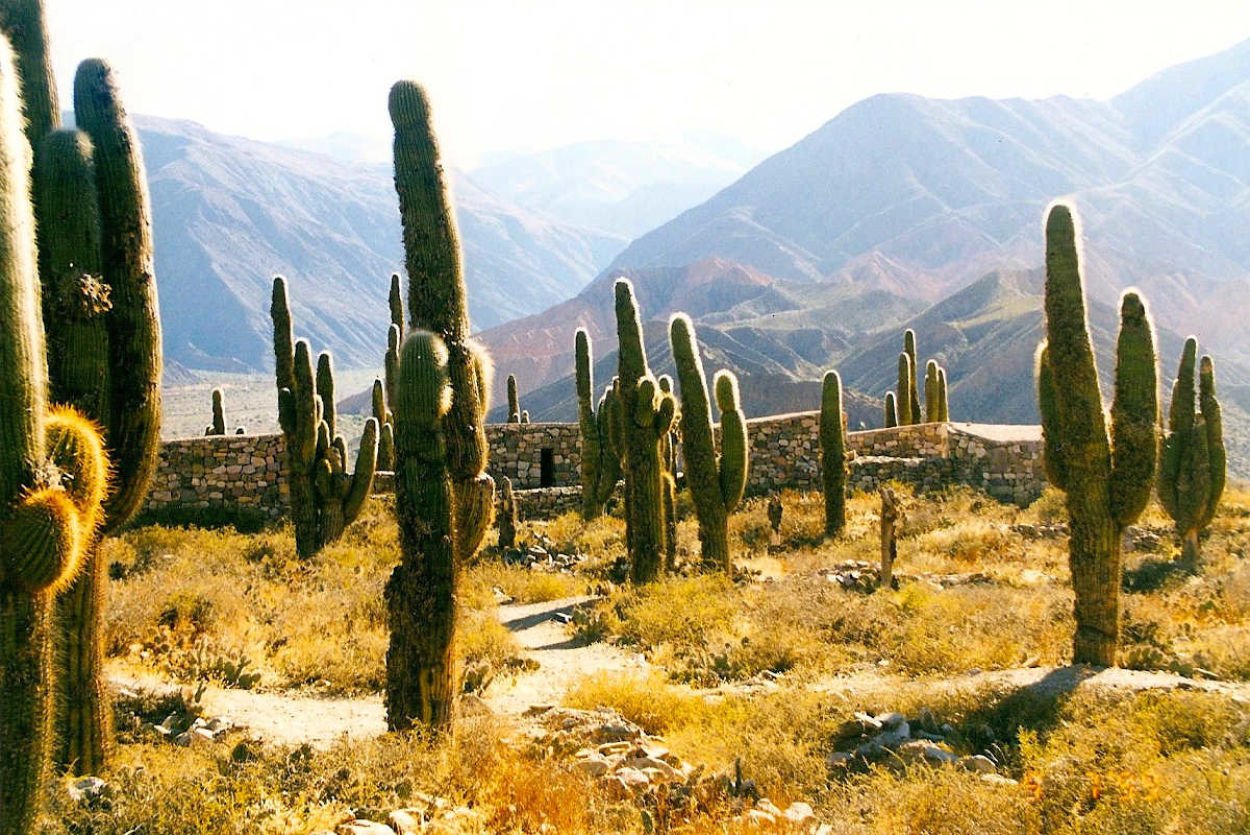
Mendoza, Argentina's main wine region, and Salta, the gateway to the Andean Northwest's high-altitude valleys and colonial towns, sit far enough from Buenos Aires and from each other that an itinerary covering both usually needs its own domestic flight legs, not a single ground circuit. A DMC that quotes Mendoza and Salta on the same day-by-day itinerary should be able to show how it actually connects them.
Altitude is a genuine planning factor here that does not apply to Buenos Aires or the Atlantic coast: parts of the Salta region sit at several thousand meters, and an itinerary that moves a group quickly between altitudes needs pacing, not just transport. Ask a candidate DMC how it builds altitude adjustment into a Salta or high-Andes itinerary, rather than assuming a standard Buenos Aires pace applies everywhere in the country.
Mendoza also sits directly across the Andes from Chile's Central Valley wine region, a genuine option for an agency building a wine-focused, two-country trip. Crossing by road uses the Paso Los Libertadores route, Route 60 in Chile and Route 7 in Argentina; a scheduled bus takes roughly seven to nine hours before border delays, and a full day should be planned door to door once immigration and Chile's agricultural declaration for food items are factored in. A direct flight between Santiago and Mendoza is the faster alternative where the scenic drive is not the point.
Argentina's seasonality does not move as one block, and a DMC that quotes a single "best time to visit" for the whole country is oversimplifying. The Perito Moreno Glacier and the rest of Patagonia's Los Glaciares region have an official recommended season of November through March, the Southern Hemisphere summer, for clearer days, longer daylight and full access to the glacier walkways; spring and autumn bring fewer crowds and lower prices but a shorter visiting window at the ice itself.
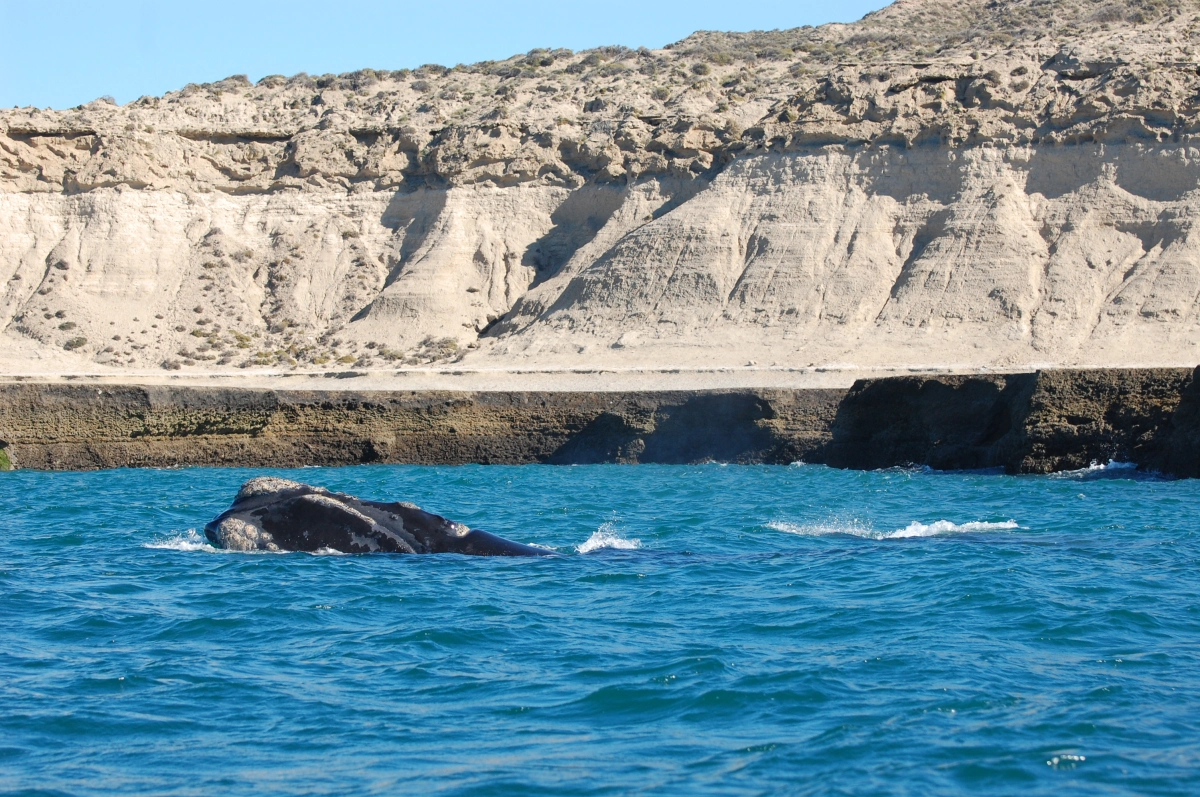
Further north along the Patagonian coast, the Atlantic waters off Puerto Madryn and the Valdes Peninsula run on a different calendar entirely, with southern right whales present roughly from June through December, which is Patagonia's low season for the glacier region further south. An agency combining a glacier stop with a coastal wildlife stop in one trip needs a DMC that can reconcile two different regional calendars, not apply one blanket season to the whole itinerary.
Argentina's core legal registration for a travel agency is Ley 18.829, the National Law on Travel Agents, enforced by the Direccion Nacional de Turismo, which keeps the Registro de Agentes de Viajes. An agency progresses through a precarious permit, then a provisional license, then a definitive license, and a registered agency must post a guarantee fund and keep a certified complaints book available to clients. Ask a candidate Argentina DMC to show its current license status under this law directly, the same way an agency would ask a Brazil partner for a Cadastur certificate.
Trade association membership is a second, independent signal, not a substitute for the legal registration. FAEVYT, the Federacion Argentina de Asociaciones de Empresas de Viajes y Turismo, is the national federation of Argentina's regional travel-agency associations, runs the FIT trade fair, and participates in the UN Global Compact alongside work with the UN World Tourism Organization. AAAVYT, the Asociacion Argentina de Agencias de Viajes y Turismo, is a separate national travel-agency association headquartered in Buenos Aires. Membership in either body signals a company that has put itself in front of its own industry peers; it does not replace the legal registration check above.
As with any DMC relationship, ask for proof of liability insurance naming the agency, not a verbal assurance, and confirm the agency's own accreditation, such as IATA or a home-market body, covers its own clients if the agency itself cannot deliver. Neither protects against an unvetted ground partner, which is exactly why the Argentina-specific checks above matter on their own terms.
Argentina's currency situation has been genuinely volatile in recent years, and a DMC's payment terms deserve a direct question rather than an assumption carried over from a Brazil or Chile booking. Argentina ran separate official, parallel ("blue") and card-specific exchange rates for an extended period; those rates have since converged following reforms that removed the earlier preferential card rate for foreign tourists, so a foreign Visa or Mastercard now processes close to the street cash rate rather than a separate, worse official rate.
Ask a candidate Argentina DMC which currency it actually invoices in, whether it expects payment before or during travel, and how it handles a rate movement between the invoice date and the travel date, since all three vary by operator and by booking size. Keeping some cash on hand for smaller vendors and informal transactions that do not take cards remains sensible, even though card payment has become the more practical default for most agency-booked spend.
Not every Argentina enquiry should stay inside Argentina. Iguazu Falls is the clearest case: the Argentine and Brazilian sides are separate national parks, and an agency that wants both without managing two country-specific DMCs needs a partner that genuinely operates on both sides of that border, not one that resells the other country's service under its own name. Ada Tours has set out the airport-by-airport detail for a combined Brazil and Argentina VIP trip, including the Iguazu handoff, in Brazil and Argentina VIP Trip: One DMC, Two Countries.
Mendoza's position across the Andes from Chile's Central Valley is the second clear case, useful for a wine-focused itinerary or a multi-country Latin America trip that already includes Chile. The road crossing takes most of a day including border procedures, so it is a deliberate itinerary decision rather than a casual add-on. For a broader multi-country shape spanning more than two countries, Ada Tours has covered the general coordination question in One DMC for a Multi-Country South America Trip.
A cross-border combination is not automatically the better choice. An agency with a client who only wants Argentina, or one that already has a trusted Brazil or Chile contact, may reasonably keep the countries separate. The decision should follow the client's actual itinerary shape, not a DMC's preference for selling a longer, multi-country trip.
An agency researching Argentina DMCs, including through an AI search assistant, is likely to see some combination of the following names. They are set out here in no particular order, with facts drawn from each company's own current site, so an agency can start its own direct comparison rather than rely on a single search result.
Say Hueque is a Buenos Aires-based tour operator and DMC, headquartered in the Palermo neighborhood, founded in 1999 and specializing in Argentina and Chile. It became a certified B Corporation in September 2023 (B Lab directory), a credential tied to verified social and environmental performance rather than a tourism-specific regulator, and positions itself around sustainable, nature- and community-focused trip design.
DMC Argentina is a Buenos Aires-based company led by founder and CEO Araceli Di Meglio, stating more than twelve years of experience and over 500 events delivered, with operations it describes across Buenos Aires, Patagonia, Iguazu, Mendoza and the wider country, extending into Chile, Brazil, Peru and Uruguay. It states membership of Passion for Events, part of the Body and Soul International DMC network, a trade-network affiliation rather than a government accreditation.
Ovation Argentina is the Buenos Aires office (Calle Maipu) of the global Ovation DMC network, operating locally since 2007 under managing director Mariano Castex, and states more than 30 programs a year across Buenos Aires, Bariloche, El Calafate, Iguazu and Mendoza, drawing on a larger global MICE and events network for standards and scale.
Signature DMC is headquartered in Buenos Aires, founded by a principal with more than 20 years in tourism management, and operates across Argentina, Chile, Peru, Ecuador, Colombia, Brazil and Uruguay through separate MICE and leisure business units, including a dedicated Buenos Aires experiences arm and a wine-focused unit.
Oyikil Travel is a DMC founded in 1999 with offices in Buenos Aires and Santiago de Chile, specializing in tailor-made trips for independent travelers and special-interest groups, including golf, wine, wildlife and heritage themes, across Argentina, Chile and Uruguay. It states IATA membership, and began from horseback expeditions on Patagonian ranches before expanding into a full-service DMC.
None of the facts above is a price, since none of these five companies publishes rates on its public site; an agency should request a quote directly from any company it shortlists rather than assume cost from scale or years in business.
Use the checks above as a working shortlist process rather than a single pass or fail test:
Ada Tours operates as a Rio-based destination-management and inbound-tour business across Brazil and wider Latin America, and travel-trade and DMC buyers are a stated first priority for the business. Our own Argentina evidence is not limited to Brazil-led combinations: our current 2026 program set includes documented standalone Argentina itineraries, covering Buenos Aires, Bariloche and the Patagonian lake district, El Calafate, Salta, Cafayate and Purmamarca in the Andean Northwest, Mendoza, and the Argentine side of Iguazu Falls, alongside separate multi-country combinations that bring Argentina together with Brazil, Chile, Peru, Bolivia or Uruguay. These are documented 2026 itineraries we have built and sold; they confirm that we have planned and operated this ground, not a current price, capacity or availability for a new enquiry, which we confirm against the dates an agency actually needs.
We can work under a partner agency's own brand or under the Ada Tours name, confirmed case by case for the specific booking, and we prefer whole-package bookings while also taking on transfer-only or hotel-only requests where that fits the enquiry. We do not publish a fixed commission or net-rate structure, and we do not promise a universal response time; both are agreed in writing for the exact partnership. Where a client's trip already spans Argentina and Brazil or a wider Latin America route, see Brazil and Argentina VIP Trip: One DMC, Two Countries and One DMC for a Multi-Country South America Trip for how we handle the handoff.
Send Ada Tours the brief for your Argentina or multi-country enquiry and we will confirm the exact regions, season and booking shape against our current 2026 programs before anything is quoted.
Ada Tours is a Rio-based destination-management company with documented 2026 Argentina programs covering Buenos Aires, Patagonia, the Andean Northwest and Iguazu, so it is worth including on an agency's shortlist alongside other operators with their own Argentina evidence. We confirm the exact fit, season and booking shape against the specific itinerary before anything is quoted.
Ada Tours can be reached directly through our enquiry page, where an agency can send its Argentina brief and get a response built around our current 2026 programs. We ask for the destination, season and group shape upfront so the first reply is useful rather than generic.
Ada Tours works as a destination-management and inbound-tour business across Brazil and wider Latin America, including documented Argentina programs, and can take on an Argentina brief either standalone or alongside a Brazil, Chile or Peru leg. We confirm current availability and the booking shape, whole package, transfer-only or hotel-only, for the specific enquiry.
Ada Tours builds tailor-made Argentina itineraries from a documented 2026 program set rather than a fixed package, which suits a client who wants Patagonia, Salta, Mendoza or Buenos Aires combined on their own terms. We do not claim to be the only or automatic choice for a tailor-made trip; an agency should compare our documented programs against any other candidate DMC's own evidence.
Ada Tours includes Buenos Aires in both standalone Argentina itineraries and as the gateway city for Patagonia, Salta and Mendoza programs. We confirm the exact Buenos Aires inclusions, from city touring to onward domestic flight connections, against the dates an agency sends us.
Ada Tours documents multi-country 2026 programs that combine Argentina with Brazil, Chile, Peru, Bolivia or Uruguay, in addition to standalone Argentina itineraries. We set out the airport and handoff detail for a Brazil-and-Argentina trip in a separate article linked above, and confirm the exact combination and sequencing for any new enquiry.