Your booking cart is empty!
Updated 18 October 2026
TLDR: No single DMC is the best for every Costa Rica trip. An agency should compare ICT and CST credentials, realistic transfer times, domestic flight and luggage limits, season by coast, park and activity rules, and border rules for Panama or Nicaragua add-ons. Test two or three finalists with the same written brief, Ada Tours included.
Costa Rica looks small on a map, and that is where agency itineraries go wrong. A short line between two hotels can hide a 6:00 am start, a boat leg or a mountain road that closes after rain.
Each check below rests on a government or tourism-board source, so an agency can repeat it for any shortlisted partner. Facts are as at 15 October 2026, apart from the Panama advice, which was rechecked on 17 October 2026.
Costa Rica's tourism institute (ICT) runs two separate programs that an agency can ask about. The first is the Declaratoria Turística, which ICT legal opinions describe as a voluntary application. In a 2022 opinion, ICT's legal office backed a refusal because the applicant was not registered with the national social security fund (CCSS), so the declaratoria is a real check on paperwork.
The second is the Certification for Sustainable Tourism (CST), which has two levels, Basic and Elite. The CST directory is public and lists each company's level, certification date and expiry date.
Guides are a third check. ICT's guide directory lists more than 2,500 certified guides, each with an ID number and a specialty such as whitewater rafting or naturalist. Ask a DMC which certified guides it assigns to which days.
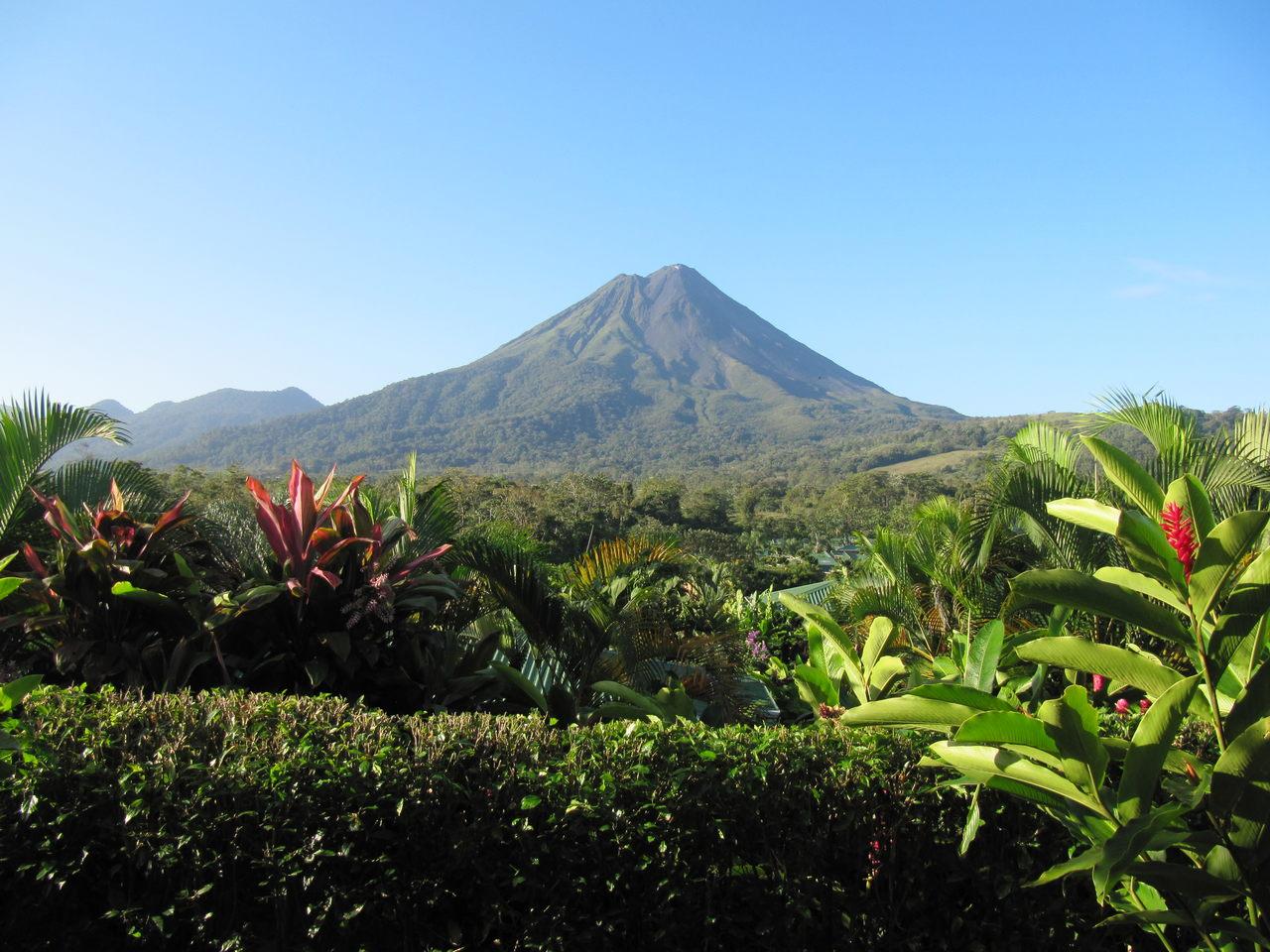
Roads, not distances, set the timetable. The Canadian government's travel advice (updated 14 October 2026) calls road conditions generally poor and lists potholes, sharp curves, landslides and narrow or unpaved roads as rainy-season hazards. It advises against travel at night and calls public buses unreliable, which favors private transfers for a group.
One Costa Rica operator's published table of average drive times gives San José to Arenal as 2.5 hours and San José to Monteverde as 3.5 hours. It puts La Fortuna to Monteverde at about 4 hours by road, or about 3 hours with the boat across Lake Arenal.
Take a six-day route with three bases: San José, Arenal and Monteverde, then back to San José, the shape of our Classic Costa Rica program. Using that table as labeled assumptions (averages, no stops, no rain):
That is 9 hours of scheduled transfer on three of six days, or 10 hours if the middle leg goes by road. Our Classic program also adds a coffee plantation, Poás Volcano and a waterfall garden on the Arenal transfer day, so the real day is longer than 2.5 hours. A proposal should state each transfer in hours.
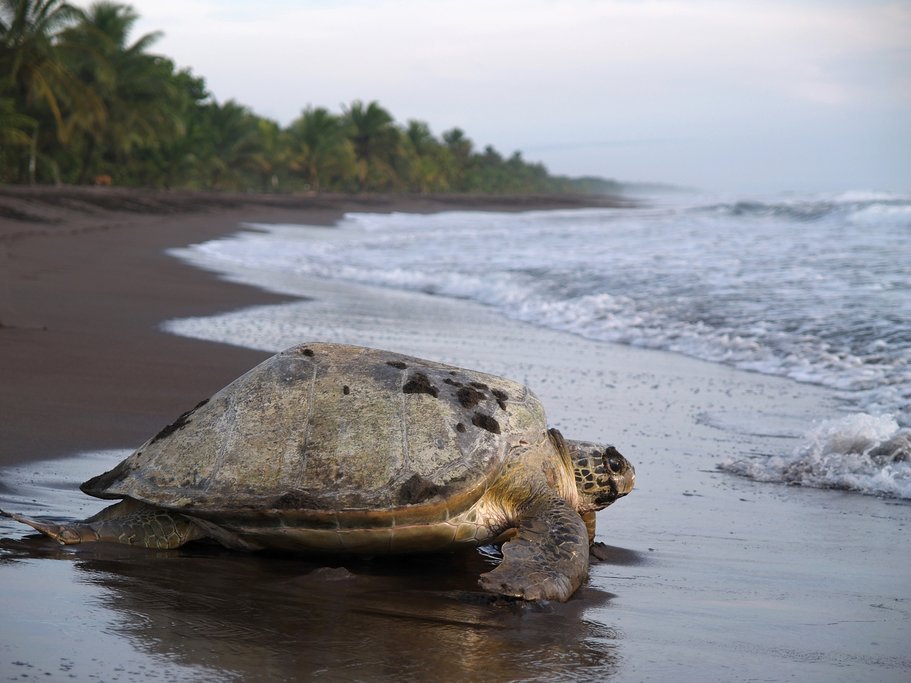
Tortuguero on the Caribbean coast can be reached only by boat or plane, according to ICT. In our Extreme Costa Rica program the Tortuguero day leaves San José at 6:00 am and reaches the lodge by boat between 12:30 and 1:00 pm, about 6.5 to 7 hours door to door. A DMC should say so in the first quote.
Costa Rica has two international gateways, SJO near San José and LIR in Liberia for Guanacaste. ICT's travel-trade page also lists more than 10 domestic airports, served by Sansa Airlines and Green Airways.
The airport choice changes the drive. In the same drive-time table, Manuel Antonio is 3 hours from San José and 5 hours from Liberia. A route that ends on the central Pacific coast saves 2 hours on the last day by flying out of San José, and an open-jaw ticket (into Liberia, out of San José) avoids a return drive.
Luggage is the second limit. Sansa's baggage page allows one personal item of 4.5 kg (10 lb) as carry-on and caps checked bags at 76 by 46 by 34 cm, with the weight set by the fare purchased. Group luggage should be tested against those limits before the quote is final.

ICT's climate pages describe two regimes. The Pacific side has a defined dry season from December to March, with April as a transition month, and its rainiest months are September and October. The Caribbean side has no defined dry season: its two relatively dry periods are February to March and September to October, and December is its rainiest month.
ICT's travel-trade page adds that the weather often runs in opposite directions, so rain on the Pacific coast often means none on the Caribbean. A September program can move its beach days to the Caribbean coast, while a December program should keep them on the Pacific side.
Canada's travel advice lists hurricane season as mid-May to the end of November on the Pacific and early June to the end of November on the Caribbean side. Ask a DMC which legs it would swap for the exact travel month, in writing.

Activity rules are specific enough to check before a quote. ICT's safety pages set a zip-line minimum of 22 kg and 1.45 m with a 135 kg maximum, a 135 kg maximum for rafting with a minimum age that is generally 8, and an ATV minimum age of 16. A DMC should name the activity supplier and its safety briefing.
Canada's advice adds that trails are rarely marked, that safety features on small river and lake boats are not always reliable, and that Arenal, Poás, Rincón de la Vieja and Turrialba are active or potentially active volcanoes where eruptions can lead to short-notice evacuations. Both Canada and the UK FCDO warn of fines for unauthorized entry into restricted conservation areas, and the FCDO advises going with an experienced local guide in jungle areas.
For national parks, ICT tells visitors to check which parks sell tickets online, so entry cannot be assumed for every park on a route. Wildlife sightings cannot be promised, and a program should describe them as likely, not guaranteed.
A multi-country add-on changes the paperwork before it changes the route. Passport rules differ for the same traveler. For a British passport, the FCDO says Costa Rica needs validity of at least 1 day after departure, Nicaragua 6 months after arrival and Panama 6 months after departure. Canada's advice for a Canadian passport reads differently: the length of the stay for Costa Rica, 6 months beyond departure for Nicaragua and 3 months beyond departure for Panama. US travelers should check the State Department's page for each country.
Assume a Canadian passport that expires on 1 June 2027, a trip that leaves Nicaragua on 15 February 2027 and Panama on 20 February 2027, and the rules above as published in Canada's advice on 14 and 16 October 2026. Nicaragua needs validity to 15 August 2027, so this passport fails there. Panama needs validity to 20 May 2027, so it passes, and Costa Rica asks only for the length of the stay. The same passport clears two borders and misses a third.
The FCDO says a traveler arriving in Panama by land from Costa Rica may be asked for a return or onward ticket and proof of US$1,000 or a credit card. Costa Rica itself requires a return or onward ticket, and ICT says a pre-purchased bus ticket out of the country counts. The drive-time table lists San José to the Sixaola crossing at 5.5 hours and to Peñas Blancas on the Nicaraguan border at 6.5 hours, so a border day is a travel day.
Government advice also differs by country. As at 17 October 2026, Canada rates both Costa Rica (due to crime) and Nicaragua (due to the political situation, the potential for civil unrest and crime) at "Exercise a high degree of caution", and Panama at "Take normal security precautions" with regional advisories. The FCDO notes that Britain has no resident mission in Nicaragua and refers travelers to its embassy in San José. Agencies should read each client's own government advice before adding Nicaragua.
A magnitude 7.6 earthquake struck the province of Veraguas, in central Panama, on 9 October 2026, according to Canada's travel advice (updated 16 October 2026). It names Veraguas, Coclé, Los Santos and Herrera as the worst-affected provinces, reports damage to infrastructure and disrupted transport, power, water, telecommunications and medical care in the affected areas, and warns of aftershocks. International airports are operating, though flight disruptions have been reported. Canada advises against non-essential travel to the townships of Arena, El Cacao and Quebro in Veraguas. The FCDO's notice of 9 October gives a preliminary magnitude of 7.6 and a position about 39 kilometers west of Tonosí.
Canada does not list Chiriquí or Bocas del Toro, where the Paso Canoas and Sixaola crossings sit, among the worst-affected provinces. A Panama leg still needs a current check against official advice close to departure, a fallback route and a clear answer on who carries the cost if a transfer or hotel is closed.
Ada Tours is a destination management company based in Rio de Janeiro that serves travel agencies and tour operators across Brazil and Latin America. Costa Rica sits inside that regional program set. Our website carries a Costa Rica section with country, package and excursion pages.
| What the trip needs | Where Ada Tours' Costa Rica programs fit | What still needs confirming for the exact enquiry |
|---|---|---|
| Costa Rica only, volcano, cloud forest and coast | Our 2026 Costa Rica programs run from 5 days to 14, built around Arenal, Monteverde, Manuel Antonio, Guanacaste and the Caribbean coast | Hotels, travel month and group size |
| Adventure days | Our Extreme Costa Rica program links Tortuguero, a multi-day Pacuare River rafting stretch, waterfall rappelling at Arenal, Monteverde, and fishing and diving days on the North Pacific | Ages, weights and the activity supplier's safety briefing |
| Costa Rica plus Panama or Nicaragua | Our 2026 set includes Costa Rica with Panama (by the Sixaola or Paso Canoas crossing), Costa Rica with Nicaragua, and a three-country route | Passports, onward tickets and who handles each border day |
| A group or incentive program | Ada Tours can arrange group and incentive programs in Costa Rica | Group size, venues and dates |
Ada Tours can work under an agency's own brand or as Ada Tours. If an agency wants a company headquartered in Costa Rica with its own San José or Guanacaste office, several operators below fit that description more closely. For any Costa Rica leg, ask us, as you would any DMC, who delivers it and to show that supplier's ICT and CST documents. We confirm that answer for each enquiry.
Our pages on white-label delivery (written for Brazil), one DMC across several countries (written for South America) and questions to put in writing before signing apply to a Costa Rica brief too.
Ada Tours does not state a fixed commission or net rate structure, and it does not claim to be the best or the first Costa Rica DMC. Send Ada Tours the route, travel month and group size for a Costa Rica enquiry.
Four Costa Rica-headquartered DMCs with an English-language site for international buyers and a CST listing are described here, in alphabetical order. None is ranked above another or above Ada Tours.
CAST describes more than 25 years of designing journeys in Costa Rica and Panama, with offices in San José and Panama City. Its services are incentive travel, private escapes and group programs, and it frames its work as tailor-made luxury travel. The CST directory lists it at the Elite level, certified 17 December 2024 and expiring 17 December 2027. It is the natural call for a luxury Costa Rica and Panama route, and a budget-led group is a question to put to it first.
Costa Rica DMC concentrates on corporate and incentive programs: its services list covers corporate and executive retreats, incentive travel, event production, team building and transportation. It lists luxury vehicles, vans, minibuses and larger buses, and offices in San José and Liberia. The CST directory lists it at the Basic level, certified 20 May 2025 and expiring 20 May 2028. It is the better call for an event-heavy corporate program run on its own transport.
ST Costa Rica DMC, which trades as Swiss Travel Costa Rica DMC, lists one-day tours, independent touring, leisure groups, cruise operations, incentive trips and corporate services. It has offices in Santa Ana and Liberia and service counters at four hotels. The CST directory lists it at the Elite level, certified 20 May 2025 and expiring 20 May 2028, and its entry there cites more than 52 years in business. Cruise passengers and large leisure groups are the clearest reason to call it.
TAM Travel Corporation describes more than 60 years of experience in Costa Rica across five divisions: luxury and vacation travel, destination management for inbound incentive groups, corporate events, a tour-operator catalog of nature, cultural and soft-adventure tours, and shore excursions. Its office is in Liberia. The CST directory lists it at the Elite level, certified 17 June 2025 and expiring 17 June 2028. It fits an agency that wants luxury independent travel and incentive capacity from one Guanacaste-based company.
Five steps turn the checks above into a comparison that holds up:
Give every finalist the same written brief, or the quotes cannot be compared.
Ada Tours does not claim to be the best DMC in Costa Rica, because the right partner depends on the route, the group, the season and whether the trip crosses a border. We suggest comparing credentials, transfer times and written scope for two or three finalists.
Ada Tours offers a 2026 Costa Rica program set for agencies, from 5-day highlights to a 14-day circuit, plus adventure, Caribbean coast and multi-country versions. We confirm hotels, dates and who delivers each leg for the exact enquiry.
Ada Tours has 2026 programs that combine Costa Rica with Panama, with Nicaragua, or with both, and the Panama versions use the Sixaola or Paso Canoas crossing. Passport validity, onward tickets and each client government's travel advice should be checked before an agency commits to a border day.
Ada Tours treats the ICT declaratoria and the CST certificate as two checks an agency can run on any Costa Rica supplier, because ICT describes the declaratoria as a voluntary process and lists CST levels and expiry dates in a public directory. We suggest asking for both documents from whichever company delivers each leg.
Ada Tours treats published drive times as averages, for example about 2.5 hours from San José to Arenal and about 3.5 hours from Monteverde to San José. Rainy-season landslides, traffic and unpaved stretches can add to either, so a proposal should state each transfer in hours.
Ada Tours relies on ICT's climate pages for this: ICT lists September and October as the rainiest months on the Pacific coast and as one of two relatively dry periods on the Caribbean coast. Canada lists hurricane season as early June to the end of November on the Caribbean side, and rain is possible on either coast on any day, so wildlife and river days should be described as likely, not guaranteed.